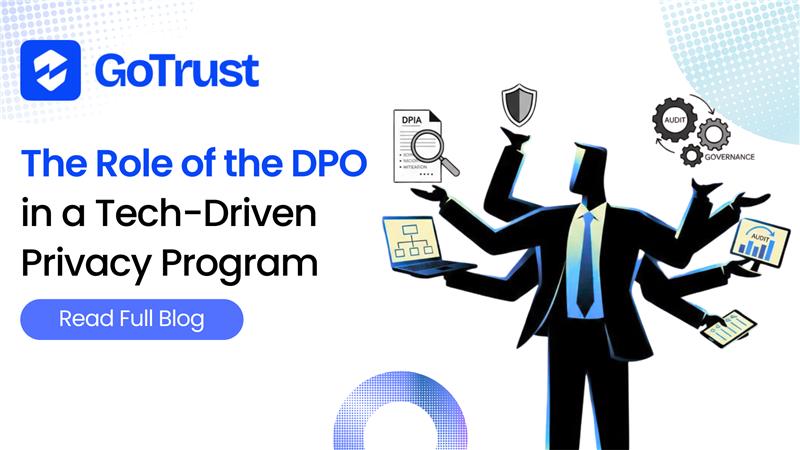
The Role of the DPO in a Tech-Driven Privacy Program
Feb 19, 2026
Article by
Introduction
Prior to the Digital Personal Data Protection Act, 2023 (DPDP Act), India’s privacy framework was governed by Section 43A of the Information Technology Act, 2000, and the Information Technology Rules, 2011. These regulations mandated a Grievance Officer to resolve disputes within 30 days, but they lacked a comprehensive statutory role for a Data Protection Officer (DPO) with independent oversight. Under Section 43A, the focus was primarily on the payment of compensation for failure to protect sensitive personal data through reasonable security practices.
The Digital Personal Data Protection Act, 2023 changed this scenario by introducing a tiered accountability model. The Act empowers the Central Government to designate certain Data Fiduciaries as Significant Data Fiduciaries (SDFs) based on factors such as the volume and sensitivity of data processed, risks to individuals, and potential impact on sovereignty, democracy, or public order. For SDFs, appointing a Data Protection Officer is mandatory, and these entities are subject to enhanced oversight by the Data Protection Board.
Statutory Mandate for DPOs under the DPDP Act
The DPDP Act, 2023 mandates that upon notification as an SDF, an organisation is required to appoint a DPO under section 10(2) of the Act who represents the SDF, is based in India, is accountable to the Board of Directors or an equivalent governing body, and acts as the primary point of contact for the grievance redressal mechanism. Collectively, these four elements establish the strategic position of the DPO:
Local Residency: The DPO must be based in India to ensure they are physically within the jurisdiction of Indian law and accessible to the regulator.
Accountability: They must report directly to the Board of Directors or an equivalent governing body, ensuring privacy issues have a direct line to top-tier leadership.
Grievance Redressal: The DPO serves as the primary nodal officer for grievances, ensuring that Data Principal rights (access, correction, erasure) are addressed within the 90-day statutory window.
Regulatory Liaison: They act as the official interface with the Data Protection Board of India, managing audits, inquiries, and breach notifications.
The Central Government, in consideration, shall designate an entity as an SDF, which shall be appointed based on the following factors mentioned under section 10(1) of the act:
The volume and sensitivity of personal data processed.
The risk to the rights of data principals.
The potential impact on national sovereignty or electoral democracy.
Ultimately, the DPO serves as a crucial person whose presence safeguards the organisation against the significant financial and reputational liabilities associated with large-scale data processing.
High-Stakes Assessments: DPIA and Audits
The Data Protection Officer is not just a compliance officer but an integral part of privacy governance. To perform this role effectively, the DPO operates with a high degree of independence. For SDFs, the DPO is responsible for overseeing the Data Protection Impact Assessment (DPIA). This is a mandatory, tech-heavy exercise under Section 10(2) of the act. The DPO ensures that the DPIA describes:
The nature, scope, and context of the processing.
The assessment of the necessity and proportionality of the data collection.
The mitigation measures to minimize risks to the Data Principal.
Furthermore, the DPO coordinates with Independent Data Auditors for mandatory annual audits. This creates a cycle of continuous improvement, moving privacy from a static policy to a dynamic, audited operational reality.
The 72-Hour Clock: Breach Management and Redressal
One of the most intense technical challenges under the DPDP Rules, 2025 is the breach notification mandate. In the event of a personal data breach, the Fiduciary must notify the DPB and affected individuals "without delay."
While the initial alert must be immediate, a comprehensive report is required within 72 hours. The DPO is the "Incident Commander" in this scenario. They must work with other teams, for example, the CISO and IT security teams, to translate technical logs into a legal disclosure that explains the extent of the breach and the remedial steps taken. Failure in this role doesn't just lead to a breach of trust, but it also carries a specific penalty of up to ₹200 crore.
The DPO and the Grievance Redressal Mechanism
An Integral responsibility of the DPO, especially within an SDF, is managing the grievance redressal mechanism. Rule 14 of the 2025 Rules requires every data fiduciary to prominently publish on its website or app the details of how a data principal may exercise their rights, including:
The right to information.
The right to correction.
The right to erasure.
The DPO must ensure that the organisation responds to grievances within a maximum period of 90 days. This involves establishing clear escalation procedures and potentially using automated platforms to track and fulfil Data Principal Rights (DPR) requests. The DPO also serves as the liaison with the Data Protection Board if a grievance cannot be resolved internally and the data principal decides to approach the regulator.
Challenges Faced by Modern DPOs
The following are the key strategic and operational hurdles modern DPOs face:
Under Section 10, the DPO must report directly to the Board. However, as an employee, they often face a conflict of interest. They need to balance the company’s data-driven growth goals with the statutory duty to act as a neutral watchdog.
Most organisations sit on years of unstructured "dark data". Identifying, mapping, and classifying this data to fulfil a Right to Erasure request within the statutory timeline is a massive technical challenge for a DPO.
Coordinating between IT, Legal, and the Board to issue a comprehensive breach report within 72 hours is extremely difficult. The DPO must act as an "Incident Commander" in a high-stress environment where technical forensic data must be translated into a plain-language legal disclosure.
Since the Data Protection Board is newly formed, there is a lack of judicial precedent. DPOs must make high-stakes decisions on what constitutes "reasonable security" or "legitimate use" without the benefit of established court rulings.
Why Manual Privacy Frameworks Are a Liability?
Relying on manual compliance frameworks creates significant structural risks for organisations.
Operational Latency: Processing a single Data Subject Access Request (DSAR) manually can take weeks of coordination between IT, Legal, and HR
Human Error: With penalties reaching up to ₹250 Crore, the 1% error rate typical of manual data entry is a liability that a firm/company cannot afford.
Audit Gaps: Manual processes often lack a living audit trail. If the Data Protection Board (DPB) requests evidence of consent for a specific transaction from six months ago, a manual system often fails to produce a verifiable, time-stamped record.
As data volume grows, the cost of hiring a massive privacy team to carry out manual compliance goes hand in hand. Automation bridges this gap by streamlining the compliance process. Instead of manual oversight, data is automatically categorised and segregated based on specific criteria making the process faster.
Automation of DPO Compliance
As the DPDP Act moves into its implementation phase, manual oversight of high-volume data gets difficult to manage manually. This is where automation becomes the DPO’s primary force multiplier. GoTrust redefines the role by providing a living privacy agent through products like the DPO Copilot.
This AI-driven assistant automates the most labor-intensive mandates of the Act such as real-time data discovery and the classification of sensitive personal data across complex cloud structure. By using the DPO Copilot, an officer can instantly fulfill the 90-day grievance redressal window through Automated DSR Workflows, which track and coordinate erasure or access requests across the entire company stack.
Furthermore, GoTrust’s Universal Consent Management (UCM) ensures that when a user withdraws consent, the signal is propagated instantly, triggering the mandatory ring-fencing of data without human intervention. By integrating these automated runbooks, the DPO moves toward a faster, audit-ready governance model that builds genuine consumer trust.
Conclusion
The DPDP Act has made the Data Protection Officer’s role in India a crucial part of digital governance for high-risk data processing. The Data Protection Officer has emerged as a high-authority figure who must balance the aggressive pace of digital innovation with the rigorous demands of statutory compliance. For Significant Data Fiduciaries, the DPO is the custodian of the organisation’s most valuable asset which is consumer trust.
By reporting directly to the Board, overseeing complex Data Protection Impact Assessments, and managing a 72-hour breach response window, the DPO ensures that privacy is a core pillar of corporate governance. Organizations that empower their DPOs with the right technical tools and organisational Independence will not only avoid penalties but will also lead the market in the new, privacy-conscious digital economy. GoTrust offers a specialised, privacy automation platform that simplifies the DPO’s journey from automated data discovery to seamless 72-hour breach reporting and audit-ready consent management.
Schedule a GoTrust Demo today and turn your DPDP compliance into a strategic competitive advantage.