Zero Trust Governance: A New Paradigm for Data Compliance
Mar 26, 2026
Article by
Introduction
The traditional perimeter-based security model, which assumes inherent trust for entities operating within an organisation’s network boundaries, is increasingly inadequate for modern data environments. Contemporary data ecosystems are highly distributed spanning cloud infrastructure, employee endpoints, SaaS applications, third-party processors, and hybrid architectures across multiple jurisdictions. Remote workforces, temporary contractor access, API-driven integrations, and the proliferation of shadow IT have blurred and, in many cases, eliminated any meaningful security perimeter. Moreover, threat vectors now frequently originate from within organisational boundaries through compromised credentials, misconfigured permissions, and inadvertent insider actions.
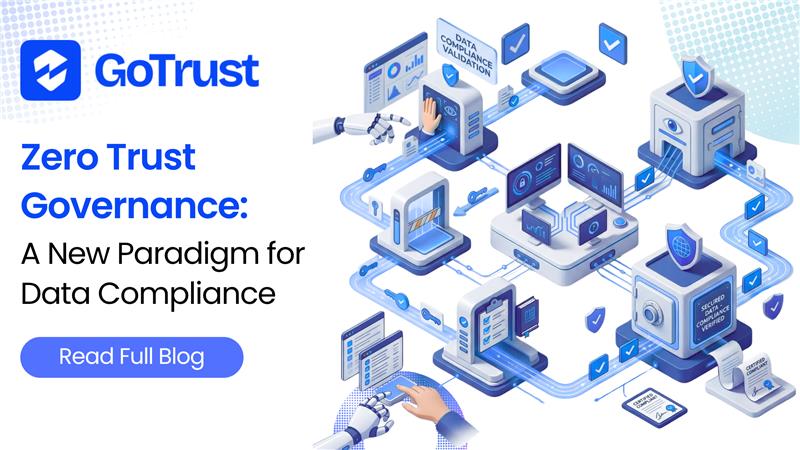
Zero-trust governance represents a fundamental shift from trust-by-default to verify-always principles. Under zero trust, every access request regardless of origin is subject to strong authentication, authorisation, and least-privilege enforcement. All data interactions are logged and subject to regular review to enable detection of unauthorised access, investigation, and remediation. Zero trust also assumes that breaches are inevitable and therefore embeds capabilities for timely detection, containment, and rapid notification to minimise impact.
While zero-trust architectures can significantly strengthen compliance with the DPDP framework by providing granular control, real-time visibility into access events, and effective breach-detection mechanisms, they are only one technical component of a much larger compliance process. Meeting the full obligations under the DPDP Act and Rules requires an end-to-end approach that combines zero-trust technical controls with legal obligations, contractual commitments (especially processor agreements), governance structures, policies, accountability mechanisms, regular audits, and documented processes irrespective of whether data processing occurs via ETL pipelines, APIs, SaaS tools, or any other method.
The Operational and Compliance Limitations of Perimeter-Centric Security
For decades, enterprise security architectures relied on perimeter defences. These included firewalls that segregated internal networks from external threats, virtual private networks that established encrypted tunnels for remote access, and endpoint protection software that prevented malware execution. After successful authentication and network connection, entities were presumed trustworthy. Access permissions were based on broad role assignments and were rarely reviewed or validated.
This model has three critical vulnerabilities. First, it overlooks insider threats. These include both malicious actors with legitimate credentials and breaches caused by excessive permissions or social engineering. Second, it allows lateral movement. After an attacker breaches the perimeter, they can easily move within internal systems and access data outside their intended scope. Third, it provides insufficient visibility into post-authentication activity, so anomaly detection and incident response remain reactive rather than proactive.
These deficiencies can make the compliance with the DPDP framework much more challenging. Rule 6 of the DPDP Rules mandates that Data Fiduciaries implement reasonable security safeguards, including encryption, access controls, activity logging, continuous monitoring, and retention of audit trails for a minimum of one year. This includes visibility on the accessing of such personal data through appropriate logs, monitoring, and review, for enabling detection of unauthorised access, its investigation, and remediation to prevent recurrence.
Rule 7 requires two distinct notification obligations in the event of a personal data breach: immediate intimation to affected Data Principals (without undue delay, in plain language explaining the breach, its impact, and remedial steps), and a detailed report to the Data Protection Board of India within 72 hours (or longer if extended by the Board). These obligations presuppose real-time visibility into access events, anomaly-detection capabilities, and automated evidence-collection mechanisms.
Organisations that rely on perimeter-centric trust assumptions lack the granular control and observability needed to meet these obligations. presupposes real-time visibility into access events, anomaly-detection capabilities, and automated evidence-collection mechanisms.
Foundational Principles of Zero Trust Governance
Zero trust is not a single product but a way to design systems using simple, connected ideas that together make the organisation safer.
Continuous verification. Authentication and authorisation are not one-time events but continuous processes. Even authenticated users undergo re-verification at regular intervals and whenever contextual factors change, such as device health, network location, or access patterns. This eliminates the assumption that past authentication confers indefinite trust.
Least-privilege access limits permissions. Users and systems receive only what they need to perform their functions. If a role requires read-only access to support data, write or delete permissions are not granted. If a user’s duties do not include financial records, access to that data is denied. When roles change or employment ends, remove permissions immediately and completely.
Micro-segmentation. Rather than treating the entire network as a unified trust zone, organisations segment environments into discrete enclaves based on data sensitivity, system criticality, or functional boundaries. Compromise of one segment does not grant access to others. For data compliance purposes, this entails isolating personal data, particularly sensitive categories such as health, financial, or children’s data, into controlled environments governed by strict access policies.
Comprehensive monitoring and logging. Zero-trust architectures require real-time observability across all data access events. Every query, modification, or transfer is logged with contextual metadata: identity, timestamp, location, device, and purpose. These logs serve dual functions—anomaly detection during normal operations and evidentiary support during regulatory investigations.
Assume breach. Zero trust operates on the premise that breaches are not hypothetical but inevitable. Controls are therefore designed to limit the impact of successful attacks, enable rapid detection, and facilitate swift response within regulatory timelines. For DPDP compliance, this translates into pre-configured breach workflows, automated evidence collection, and comprehensive report deadlines with 72-hour reporting capabilities.
Storage limitation and purpose-based erasure. Under the DPDP Rules, Data Fiduciaries are obligated to erase the personal data of Data Principals once the purpose for which such collection or processing was undertaken no longer serves such purpose. In certain categories of Data Fiduciaries and purposes set out in the Third Schedule, there are requirements for mandatory erasure of such data after a period of inactivity, subject to the existence of a legal requirement for retention of such information, accompanied by at least a 48-hour pre-erasure notification to the Data Principal as provided under the sub rule (2) of Rule 8 through the user account or registered communication channel.
DPDP Framework Alignment with Zero Trust Architecture
The DPDP Act does not name zero trust, but its demands are similar. Rule 6 of the DPDP Rules details the security steps Data Fiduciaries must take. Nearly all these steps match zero trust practices.
Encryption and obfuscation. Personal data must be protected through encryption, masking, or tokenisation, ensuring that even unauthorised access does not yield intelligible information. This reflects the zero-trust principle of assuming breach: controls are designed to minimise harm even when access controls fail.
Granular access controls. Rule 6 strictly limits who can access personal data. Zero trust uses role-based access control (RBAC) to enforce the principle of least privilege. These frameworks grant access to datasets only when a legitimate business purpose justifies it and for the time necessary.
Comprehensive logging and monitoring. The Rules explicitly require organisations to maintain visibility into data access through activity logs, real-time monitoring, and periodic access reviews. Zero trust architectures treat logging as foundational infrastructure, recording every access attempt with sufficient detail to reconstruct events during incident investigations or regulatory audits.
Minimum one-year log retention. Rule 6 stipulates that activity logs must be retained for at least one year, facilitating post-incident analysis and supporting compliance audits. Zero trust frameworks rely on long-term log retention to establish behavioural baselines, identify trends, and demonstrate sustained compliance.
Processor security is required. The Rules say Data Fiduciaries must require security safeguards in contracts with Data Processors. Zero trust goes further. It also calls for processors to user continuous verification and monitoring, not just perimeter defences or default trust.
Operationalising Zero Trust Through Automated Data Discovery and Classification
Zero trust governance begins with comprehensive visibility. Organisations cannot protect data they have not identified, classified, or mapped to access policies. This necessitates automated, continuous data discovery across structured databases, unstructured file repositories, cloud storage, email systems and legacy applications.
GoTrust’s data discovery platform employs AI-driven pattern recognition and entity detection algorithms to identify personally identifiable information (PII) across heterogeneous data estates, including environments where data is unlabelled, unstructured, or resides within shadow IT systems. The platform continuously scans on-premises, cloud, and hybrid infrastructures, maintaining an up-to-date inventory as new data is created, systems are provisioned, or business processes evolve.
Discovered data undergoes automated classification based on sensitivity tiers: low, medium, high, or critical. This classification drives zero-trust access policies. High-sensitivity data, such as financial records, health information, or data concerning children, triggers enhanced controls. Access is restricted to users with verified roles, legitimate business purposes, and explicit authorisation. Every access event is logged with comprehensive metadata. Unauthorised access attempts are automatically blocked, and security teams receive real-time alerts.
This represents zero trust in operational practice. Organisations do not assume that internal users can be trusted with all data by virtue of network access. Instead, they verify in real time whether each access request aligns with documented roles, purposes and contextual factors. GoTrust’s continuous discovery capabilities ensure that the data inventory remains current, preventing the compliance gaps that arise when manual mapping exercises become outdated immediately upon completion.
Enforcing Least-Privilege Access Through Role-Based Controls
In zero-trust architectures, access is not a static entitlement but a continuously evaluated privilege. Each access request undergoes real-time assessment: identity verification, role validation, data sensitivity evaluation, behavioural analysis, and device posture checks. Access is granted only when all criteria are satisfied and only for the minimum scope and duration required.
GoTrust’s governance framework supports enterprise-grade role-based access control (RBAC) that enforces least-privilege policies across the data lifecycle. Roles are defined centrally such as customer support representative, data analyst, or HR administrator and each role is mapped to specific data categories, processing activities, and permissible operations. When personnel join the organisation, they are automatically assigned roles and receive the corresponding permissions. When they transition to different roles or exit the organisation, permissions are updated or revoked immediately.
This eliminates permission accumulation, a common vulnerability in traditional models where employees retain access rights from prior roles indefinitely. In zero-trust models supported by automation, access permissions are continuously validated. Unused permissions are flagged for review. Access patterns that deviate from established norms trigger alerts. And when breaches occur, detailed role-based logs enable rapid identification of compromised accounts and affected data.
Real-Time Monitoring, Audit Trails, and Breach Response
Zero trust governance is inherently dynamic. Continuous monitoring enables organisations to detect anomalies before they escalate into full-scale breaches, and comprehensive audit trails provide the evidentiary foundation for regulatory compliance and incident response.
Beyond security-focused logging and breach response, zero-trust governance covers the entire data lifecycle by enforcing storage limitations under Rule 8. The Rules require erasure of personal data once its purpose is fulfilled, with mandatory pre-erasure notifications for specific fiduciaries and purposes.
GoTrust’s compliance automation platform aggregates access logs, consent states, data subject rights requests, retention schedules, and security alerts into unified dashboards. Compliance and security teams gain real-time visibility into potential anomalies: access patterns inconsistent with user roles, failed authentication attempts, bulk data exports, or processing activities lacking valid consent. Automated alerts enable rapid investigation and remediation before minor issues escalate into reportable breaches.
These dashboards are designed for audit readiness. When the Data Protection Board of India requests compliance evidence, organisations can export structured, timestamped reports that demonstrate how data was accessed, which controls were enforced, and what actions were taken when anomalies were detected. This transforms compliance from reactive documentation exercises into proactive, demonstrable governance.
Audit trails are central to zero-trust governance. GoTrust maintains immutable, cryptographically secured logs of every access event, consent capture, data subject rights request, and breach notification. Logs cannot be altered retroactively, ensuring evidentiary integrity during regulatory investigations. Retention is automated to meet the one-year minimum mandated by Rule 6, with alerts when logs approach deletion eligibility.
For organisations operating at scale, particularly those likely to be designated as Significant Data Fiduciaries (SDFs) due to the large volume of personal data they process, manual log management is operationally infeasible. Zero trust governance depends on automation to collect, aggregate, analyse, and retain logs without human intervention. GoTrust provides this capability as an integrated component of its compliance platform.
How GoTrust Enables Zero Trust Governance at Enterprise Scale
Adopting zero-trust governance does not require wholesale replacement of existing technology infrastructure. Rather, it involves layering governance, monitoring, and enforcement capabilities onto legacy systems. GoTrust’s platform Integrates with existing databases, cloud storage, identity and access management systems, and security tools to provide the zero trust governance layer organisations require for DPDP compliance.
The platform combines several modules that collectively operationalise zero trust principles:
Automated data discovery and classification continuously scan data estates, identifying and tagging personal data with sensitivity classifications that drive access policies and retention rules.
Role-based access control (RBAC) enforces least-privilege permissions, automatically provisioning and revoking access based on verified roles and continuous behavioural evaluation.
Real-time monitoring and anomaly detection identifies deviations from established access patterns unauthorised attempts, consent withdrawals, unusual data transfers and triggers immediate alerts and response workflows.
Immutable audit trails and evidence collection maintain tamper-proof records of every access event, compliance action, and breach response, with one-click export capabilities for regulatory submissions.
Breach detection and 72-hour notification workflows integrate with security information and event management (SIEM) tools to detect breaches in real time and automatically initiate DPDP-compliant notification procedures.
Consent and preference management ensure that all processing activities are grounded in lawful bases, with real-time enforcement when consent is withdrawn or when purposes change.
For Significant Data Fiduciaries subject to enhanced obligations under the DPDP framework including annual Data Protection Impact Assessments (DPIAs), independent security audits, and mandatory Data Protection Officer (DPO) appointments, GoTrust’s automation capabilities are particularly critical. The platform supports DPIA workflow orchestration, audit evidence generation, and DPO oversight dashboards, enabling compliance with high-stakes regulatory requirements.
Conclusion
Zero trust governance is a major change from older security models that trusted everything inside a network. Instead, it requires ongoing verification, limited access, and thorough monitoring. The DPDP Act and Rules support this approach by requiring encryption, strict access controls, real-time monitoring, detailed audit trails, and 72-hour breach notifications. These steps match the core ideas of zero trust.
For organisations still operating under legacy security assumptions, the 18-month DPDP compliance timeline represents both a challenge and an opportunity. Compliance deadlines extend through 13th May, 2027, providing sufficient runway to implement zero-trust governance frameworks with appropriate planning and tooling. However, organisations that delay implementation risk operational disruption, regulatory penalties, and reputational damage when enforcement activity intensifies.
GoTrust’s governance and compliance automation platform provides the operational infrastructure necessary to implement zero trust governance at scale. By automating data discovery, enforcing least-privilege access, monitoring all data interactions, and maintaining audit-ready evidence, GoTrust enables organisations to satisfy DPDP obligations whilst establishing more resilient, transparent, and accountable data governance frameworks. In an environment where breaches are inevitable and regulatory expectations are rising, zero trust governance is no longer optional. It has become the foundational standard for data compliance.